As an Amazon Associate, Home of a Book Lover earns from qualifying purchases. Book data from Open Library.

Atomic Habits works because it is a toolkit. James Clear takes one loop (cue, craving, response, reward), attaches a law to each stage (make it obvious, attractive, easy, satisfying) and hangs tactics like habit stacking off every law. The idea underneath is that systems and identity beat willpower.
A good next book should give you something Clear doesn't. Some of the eight below go further back toward the science, written by the researchers whose studies habit advice leans on. Others zoom out, from a single routine to organizations, focus or long-term goals. One, Nudge, flips the perspective entirely: instead of changing yourself, it shows how other people design the environment you choose in. Where the research behind a pick has been challenged, we say so.
What readers value in Atomic Habits
Readers who like Atomic Habits tend to value three things: advice that can be acted on the same day, the shift from goals to systems, and the claim that the environment around a habit matters more than motivation. The recommendations are judged against those three, plus a fourth Clear's critics raise: how close the book stays to evidence. Clear synthesizes existing research rather than presenting new findings, and a Guardian critique lumped his genre in with pseudoscientific grand theories, so several picks here are by scientists.
How we matched these books
- Explains how behavior actually changes, not just why it should
- Offers either a usable method or the research a method rests on
- Adds a dimension Atomic Habits treats lightly: evidence, emotion, organizations, attention or perseverance
- Contested evidence is named on this page
8 books like Atomic Habits
The Power of Habit
Why We Do What We Do in Life and Business
- Why it matches
- Charles Duhigg's habit loop of cue, routine and reward is the model Clear builds on, and both books treat craving as what drives a habit.
- Key difference
- Duhigg is a reporter telling stories, and he widens the lens from individuals to companies and societies: Alcoa's safety push, Target's predictions, the Montgomery bus boycott. Expect fewer step-by-step instructions.
- Best for
- Readers who want the why, told through narrative journalism.
Tiny Habits
The Small Changes That Change Everything
- Why it matches
- BJ Fogg shares Clear's insistence on making behaviors easy and on anchoring them to an existing routine, which Fogg's chapter on prompts calls the power of after.
- Key difference
- Fogg puts emotion at the center, arguing that emotions create habits and that celebrating small successes wires them in. His method rests on his own model: behavior happens when motivation, ability and a prompt converge.
- Best for
- People who keep abandoning ambitious resolutions.
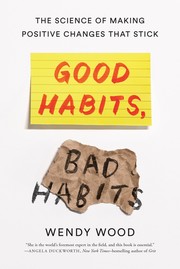
Good Habits, Bad Habits
The Science of Making Positive Changes That Stick
- Why it matches
- Wendy Wood's research is the science of the environment-first approach: habits are context–response links built through repetition and reward.
- Key difference
- Written by an academic drawing on three decades of her own studies, it is less of a system and more of an explanation, with findings such as roughly 40 percent of daily actions being habitual and the power of friction.
- Best for
- Readers who want to know which habit advice the evidence supports.
Switch
How to Change Things When Change Is Hard
- Why it matches
- Chip and Dan Heath also argue that shaping the path beats relying on effort, and building habits is one of their moves.
- Key difference
- Their frame is change in general, for teams and communities as much as individuals, organized around direction, motivation and environment.
- Best for
- Managers trying to change how a group behaves.
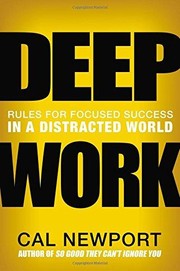
Deep Work
Rules for Focused Success in a Distracted World
- Why it matches
- Cal Newport applies the systems mindset to one high-value habit: sustained concentration, protected by rules and routines.
- Key difference
- It is narrower and more opinionated, arguing for embracing boredom and suggesting many professionals quit social media, and it assumes a degree of control over your schedule.
- Best for
- Knowledge workers whose main bad habit is distraction.
Mindset
The New Psychology of Success
- Why it matches
- Like Clear's identity-based habits, Carol Dweck's book is about the beliefs underneath behavior, in her case whether ability is fixed or can grow.
- Key difference
- It is about attitude to failure rather than routines. Independent evidence is mixed: 2018 meta-analyses found weak overall effects, with some benefit for disadvantaged or at-risk students.
- Best for
- Parents, teachers and coaches.
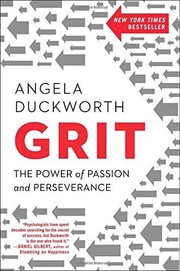
Grit
The Power of Passion and Perseverance
- Why it matches
- Angela Duckworth's interest in sustained effort over years complements Clear's compounding 1 percent.
- Key difference
- It is about passion and perseverance for long-term goals, not daily routines. A 2017 meta-analysis found grit strongly overlapping with conscientiousness and only moderately linked to performance.
- Best for
- Readers chasing one long goal.
Nudge
Improving Decisions About Health, Wealth, and Happiness
- Why it matches
- Clear's make it obvious and make it easy are, in Thaler and Sunstein's terms, choice architecture: defaults and layouts that steer behavior.
- Key difference
- It is written for people designing choices for others, such as employers and governments, and argues for libertarian paternalism. Its effect sizes are disputed after a 2022 reanalysis.
- Best for
- Anyone designing workplaces, products or policies.





Side-by-side comparison
| Book | Unit of change | Written by | Method or explanation | Pages (listed edition) | Evidence note |
|---|---|---|---|---|---|
| Atomic Habits | Individual routine | Writer | Method (Four Laws) | 320 | Synthesis of existing research |
| The Power of Habit | Person, company, society | Journalist | Explanation through stories | — | — |
| Tiny Habits | Individual routine | Researcher-practitioner | Method | 306 | Centered on author's own model |
| Good Habits, Bad Habits | Context and cues | Academic researcher | Explanation | 303 | — |
| Switch | Teams and individuals | Academic + writer | Method | 305 | — |
| Deep Work | Attention | Academic | Rules | 304 | — |
| Mindset | Beliefs about ability | Researcher | Explanation | 276 | Effects weak in 2018 meta-analyses |
| Grit | Long-term goals | Researcher | Explanation | 333 | Overlap with conscientiousness (2017) |
| Nudge | Choice environment | Researchers | Policy framework | 304 | Effect sizes disputed (2022) |
Pick by what you want
- stories instead of checklists The Power of Habit
- the smallest possible starting point Tiny Habits
- the research behind the advice Good Habits, Bad Habits
- to change a team, not just yourself Switch
- fewer distractions at work Deep Work
Keep exploring
FAQs
Atomic Habits or The Power of Habit: which came first?
The Power of Habit, published by Random House in February 2012; Atomic Habits followed from Avery in October 2018. Reading Duhigg's loop first makes Clear's added stage, and his four laws, easier to see.
Which book on this list is most grounded in research?
Good Habits, Bad Habits, because Wendy Wood is the habit scientist who ran many of the studies. Tiny Habits comes from a Stanford behavior researcher, but it centers his own method rather than surveying the field.
Are Mindset and Grit still worth reading given the criticism?
Yes, as long as you treat them as ideas rather than guarantees. Dweck has said growth mindset is often misread as just about effort, and Duckworth acknowledged in 2021 that she had misinterpreted psychometric properties of her Grit Scale.
Is there a habit book for people who hate self-help tone?
Try Switch or The Power of Habit; both are built from case stories rather than exhortation.
Sources & attribution
- Atomic Habits: cue/craving/response/reward; Four Laws; habit stacking; identity; Guardian critique; synthesis; Avery October 16, 2018 — en.wikipedia.org
- Four Laws of Behavior Change — jamesclear.com
- Power of Habit: habit loop, craving, Alcoa, Target, Montgomery bus boycott — en.wikipedia.org
- Power of Habit published February 28, 2012 by Random House — en.wikipedia.org
- Tiny Habits chapters incl. prompts 'the power of after', emotions create habits — openlibrary.org
- Fogg Behavior Model: motivation, ability, prompt at the same moment — bjfogg.com
- Celebrating small successes — harpercollins.com
- Wood: context–response associations; ~40% habitual; friction — en.wikipedia.org
- Good Habits, Bad Habits: three decades of research — openlibrary.org
- Switch: direction, motivation, environment; build habits — openlibrary.org
- Deep Work: rules incl. embrace boredom, quit social media — openlibrary.org
- Mindset: fixed vs growth; 'just about effort' misreading — en.wikipedia.org
- 2018 meta-analyses weak overall effects — pubmed.ncbi.nlm.nih.gov
- Grit: 2017 meta-analysis (Credé et al.) — pubmed.ncbi.nlm.nih.gov
- Duckworth 2021 Grit Scale acknowledgment — en.wikipedia.org
- Nudge: choice architecture, libertarian paternalism — en.wikipedia.org
- 2022 reanalysis of nudge effects — pubmed.ncbi.nlm.nih.gov
Book data from Open Library.